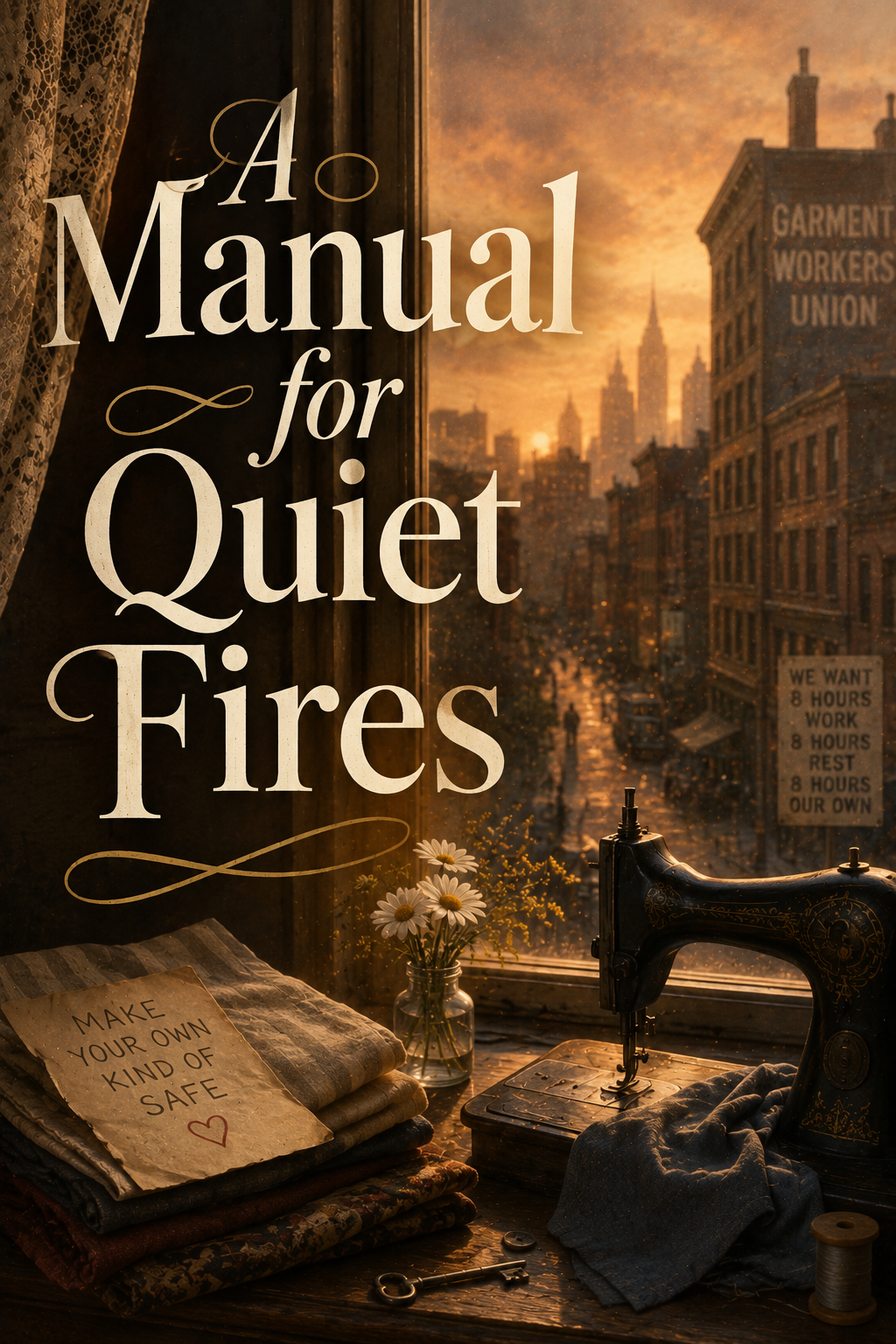
A Manual for Quiet Fires
In 1918 Chicago, a small cutting-room fire leaves a seamstress burned and an industrial chemist with a questio
In 1918 Chicago, a small cutting-room fire leaves a seamstress burned and an industrial chemist with a question no safety report can contain. Mara Voss knows the factory’s fireproofing material has been changed. She also knows that proving it will not keep a worker paid, housed, or safe. As wartime contracts accelerate production and influenza restrictions close familiar meeting places, Mara follows the evidence beyond her laboratory: into a settlement clinic, an immigrant boardinghouse, and the guarded conversations of women who have learned to survive official indifference. Vera Sokol, a garment cutter who distrusts professional reformers, becomes her sharpest critic and most necessary ally. Together, the women assemble a record from burns, fabric scraps, clinic notes, purchase orders, and the city’s own missing paperwork. But when an inspection is staged to contain the danger, speaking plainly may cost them wages, rooms, and reputations. A Manual for Quiet Fires is an intimate historical drama about work, friendship, and the difficult practice of making safety impossible to dismiss.
Retailer details coming soon.Contact the author directly or reach out to the BookPreview team for the latest publication information.Ask about this title
READ A LITTLE
A first page
to begin with.
A short preview from A Manual for Quiet Fires.
The Test
Mara Voss trusted a flame only after it had been measured.
The burner in the Halcyon laboratory gave a steady blue tongue beneath the iron frame. Mara adjusted the clamp by half an inch, set the treated cotton over the wire, and started the watch. The cloth blackened at the edge, lifted a thread, and held. It did not catch. That was the point of the compound: to buy time between heat and fire, the narrow interval in which a woman might reach a stair or a bucket or the shoulder of another woman who had already found the door.
On the bench beside her, the sample from Haskell Garment Works smelled wrong.
· · ·